The AI Workflow & Best Practice AI Design Course
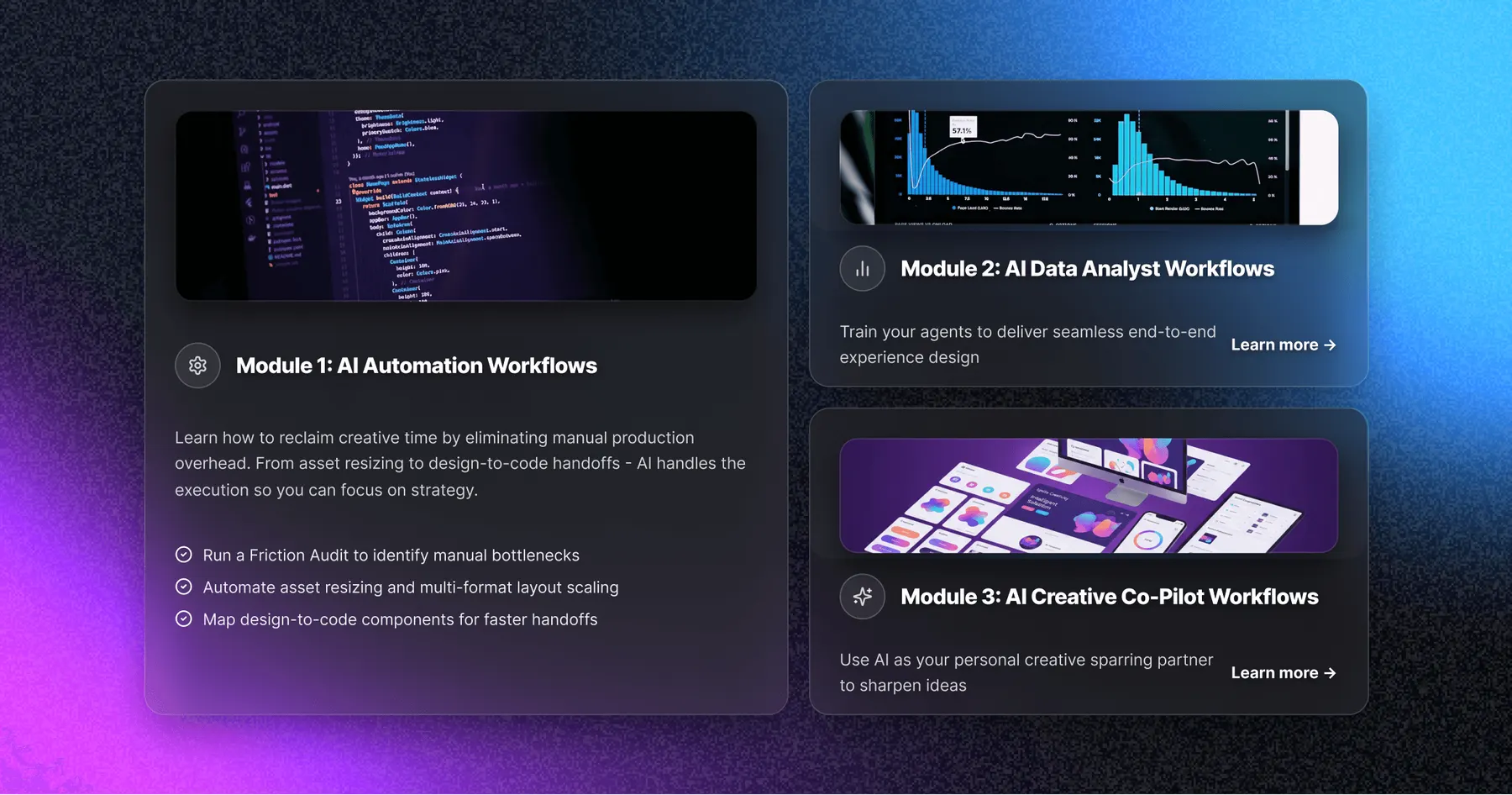
As product organisations scale, design leaders must protect their teams from becoming bogged down by tedious, manual execution cycles. Partnering directly with executive leadership, I audited the delivery pipeline of a distributed product team across the UK and West Africa.
To address identified bottlenecks, I dedicated three days to targeted technical preparation and capability mapping. I then engineered and delivered a bespoke, three-part AI Workflow Evolution Program.
Structured into hyper-focused, one-hour weekly modules, this initiative successfully transitioned the team from manual production executioners into strategic, data-informed product drivers.
Uncovering the design teams operational bottlenecks
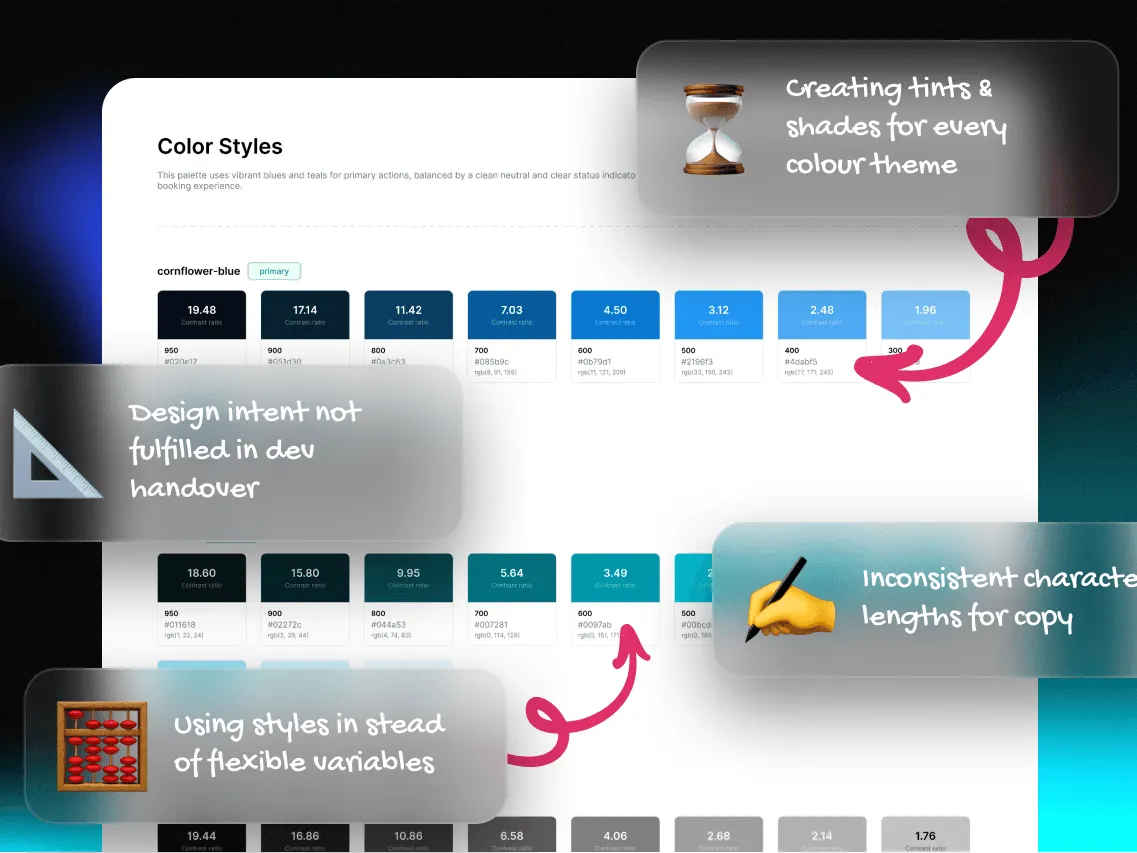
An initial diagnostic revealed that the team's velocity was restricted by highly repetitive, manual tasks.
Routines such as generating standard empty states, wire-framing baseline layouts from scratch, and manually auditing components for consistency had become major operational drags.
This manual overhead delayed engineering handoffs and pulled senior talent away from high-impact product strategy.
Demonstrating live prototypes for engaging workshop learning sessions
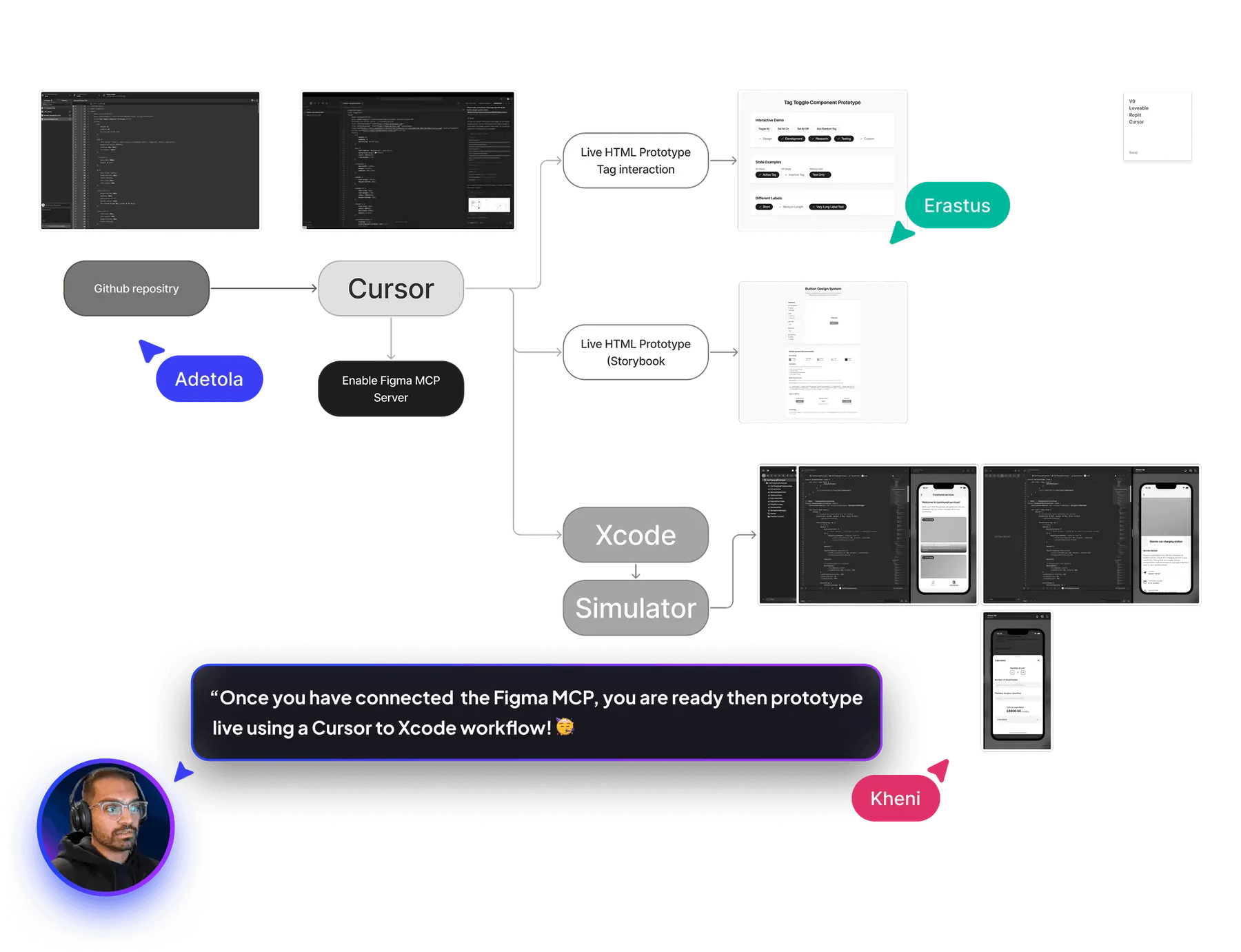
Following my direct discovery phase with executive leadership to align the curriculum with core business objectives, I spent several weeks architecting a suite of interactive prototypes, data simulations, and prompt engineering frameworks. The goal was to deliver immediately actionable workflows tailored to each designer's daily project pipeline.
A primary success metric of this module focused on upgrading the team's relationship with their existing design system, transforming traditional visual assets into live, production-ready code environments:
Model Context Protocol (MCP) Workflows: Coached designers on utilizing Figma MCP servers to stream design system variables and tokens directly into modern AI code environments (such as Cursor, Claude Code, and Replit).
The Vibe Coding Paradigm: Instructed the team on how to rapidly prototype live application views, shifting their workflow from static layouts to active code interpretation.
The Design Engineer Transition: Partnered directly with developers to cross-train designers, enabling them to safely compile and run native software simulations locally within Xcode.
By teaching designers how to run their own code simulations, we removed the traditional handoff friction—allowing the team to validate layout intent, spacing, and micro-interactions long before hitting the formal engineering sprint backlog.
The 3-Phased Capability Transformation
The AI Design course created
Week 1: Streamlining Production Friction (AI Automation Workflows)
The Learning Outcome: Automating non-strategic design tasks to remove operational friction and shift focus onto big-picture problem-solving
The Workflow Blueprint: Led the team through a collaborative Friction Audit to isolate three primary personal workflow blockers in their current daily execution cycles
The Impact: Implemented modern AI workflows for automated asset resizing, multi-format layout scaling, and accelerated design-to-code components - Week 1.csv]. This successfully shifted the team's responsibility from production execution to strategic system design
Week 2: De-Risking Choices via Automation (AI Data Analyst Workflows)
The Learning Outcome: Utilising data-driven AI insights to analyse user behaviour and preferences, directly tying UI choices to performance metrics
The Workflow Blueprint: Addressed the team’s biggest data blind spots by demonstrating how specialised AI engines can process complex telemetry—like heat-maps, user feedback patterns, and drop-off metrics—in seconds
The Impact: Conducted a live simulation where designers used automated insights to diagnose a low-converting user journey. This trained the team to strip away subjective visual bias and present highly objective, data-justified layout improvements to stakeholders
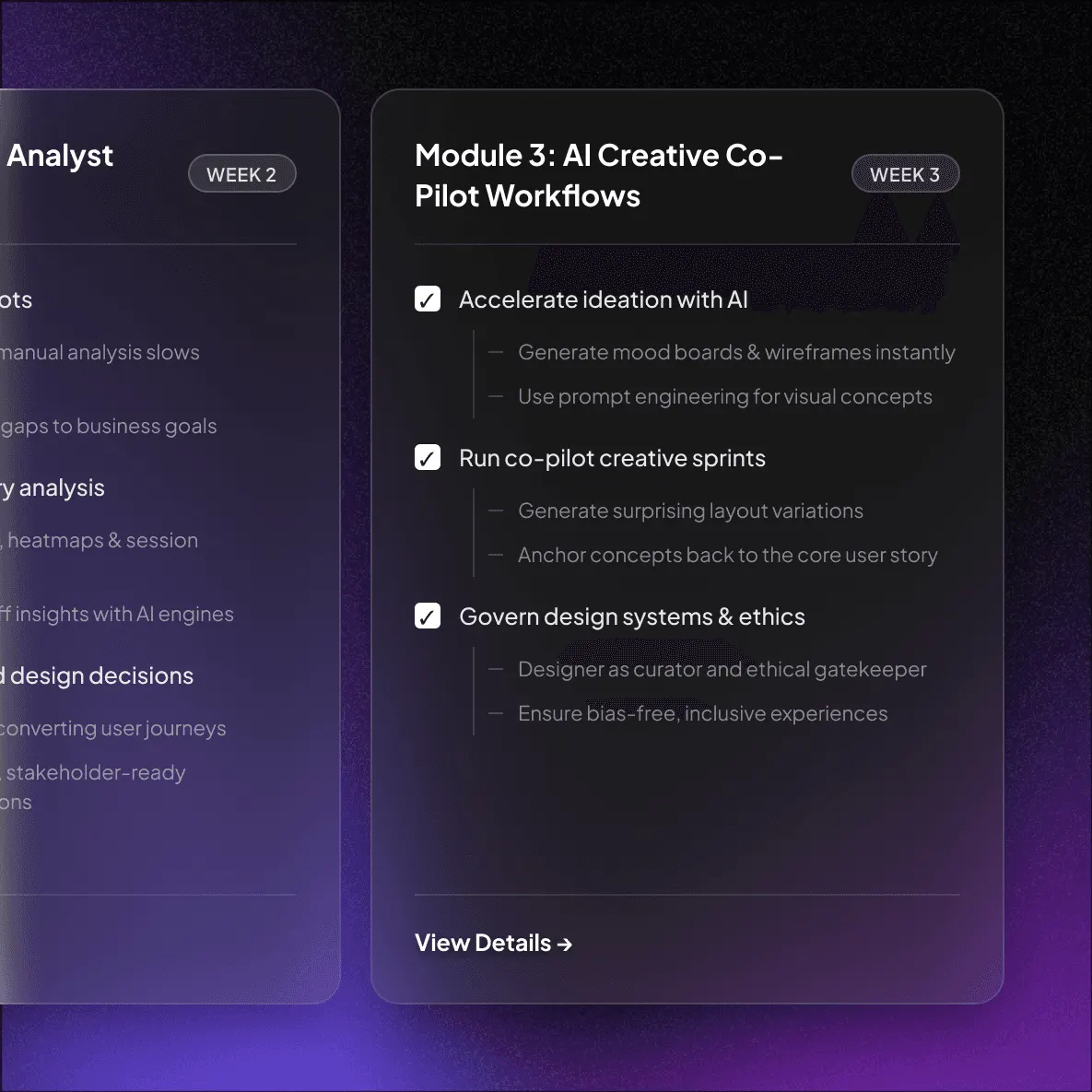
Week 3: Elevating Creative Vision (AI Creative Co-Pilot Workflows)
The Learning Outcome: Blending generative AI workflows with human empathy, storytelling, and ethical guardrails around inclusive, bias-free design systems - Week 3.csv].
The Workflow Blueprint: Examined creative blocks across distributed environments and introduced advanced prompt engineering workflows to rapidly spin up mood boards, unconventional layouts, and visual concepts.
The Impact: Reinforced that human intuition, empathy, and storytelling remain irreplaceable. The final module positioned the designer as the ultimate curator and ethical gatekeeper over these tools, ensuring the product experience stays centred on true human needs
Learning with Suraj was an insightful experience. We discussed how the ability to include AI into my current workflow as a designer and it wwas an awesome session
Senior Product Designer at Brightbridge
It was quite insightful and I was able to refresh some things I knew while being exposed to newer things in the AI space
Lead Product Designer at KEYS Community